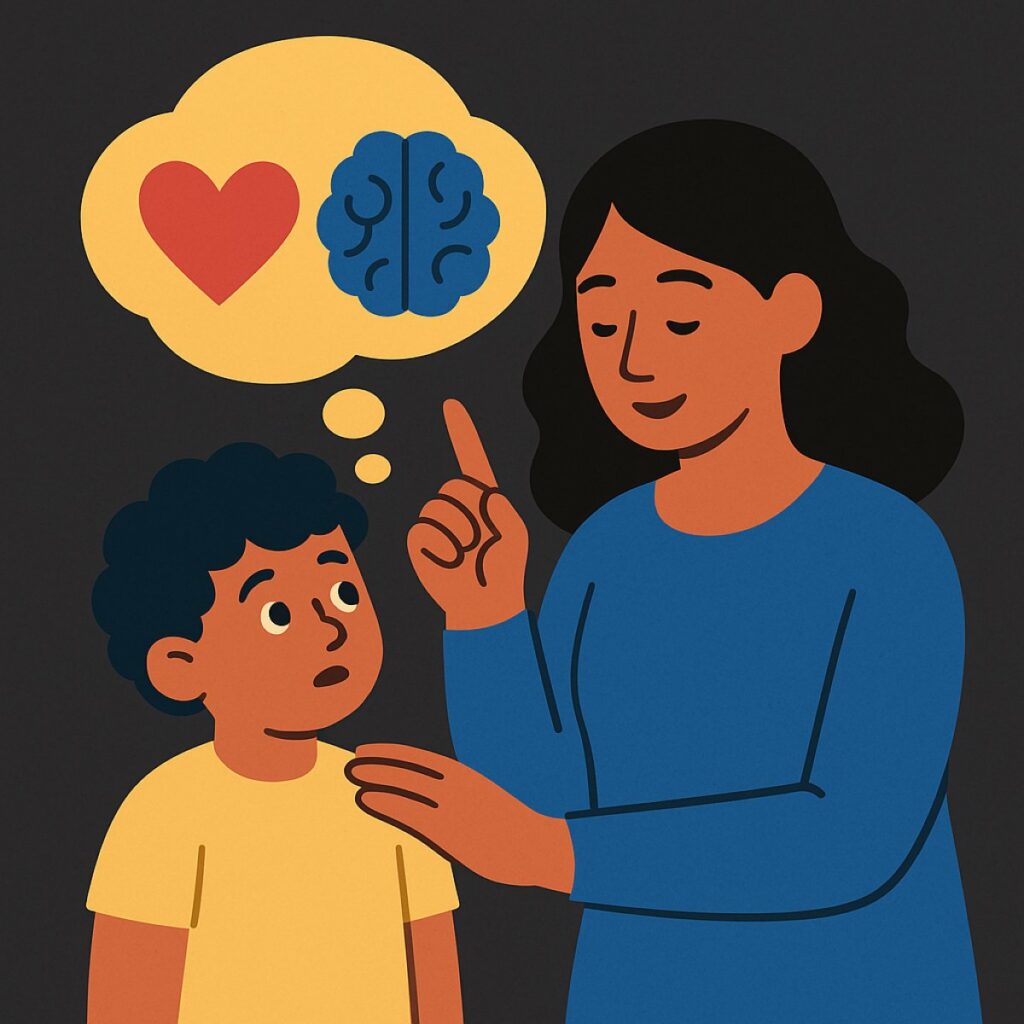

What is Psychological Assessment in Children?

Psychological assessment in children is a comprehensive diagnostic process designed to scientifically and accurately understand a child’s emotional, behavioral, and cognitive functioning. Its goal is to identify the child’s strengths and the challenges they face in areas such as learning, communication, emotional regulation, and social relationships.
This type of assessment typically involves interviews with the child and their caregivers, structured clinical observations, and the use of standardized, age-appropriate psychological tests—such as intelligence (IQ) tests, academic achievement tests, and rating scales for anxiety, depression, Attention-Deficit/Hyperactivity Disorder (ADHD), and Autism Spectrum Disorders (ASD).
The assessment helps establish a reliable diagnosis and guides the development of an individualized therapeutic and educational plan that supports the child at home and at school. It also reassures parents and clarifies the most effective strategies for managing their child’s behavior and emotional difficulties.
In this way, psychological assessment in children becomes a key tool for early detection of mental and behavioral disorders and for improving the quality of life of both the child and their family.
When Does Your Child Need a Psychological Evaluation?
Your child may need a psychological evaluation if you notice ongoing changes in their behavior or emotions that affect school performance, relationships, or daily life. This can include sudden social withdrawal, frequent and intense temper tantrums, difficulty sustaining attention and concentration,明显 delays in speech or social skills, or fears and anxiety that interfere with sleep or going to school.
It’s also recommended to seek a psychological assessment if you suspect conditions such as Attention-Deficit/Hyperactivity Disorder (ADHD), learning disorders, autism spectrum disorder, depression or anxiety, or if your child has gone through a psychological trauma such as the loss of a parent or exposure to domestic violence.
If these symptoms persist for several weeks and lead to a sudden drop in academic performance, or to repeated behavioral problems at home or school, this is a clear sign that you should consult a child psychologist. A comprehensive psychological evaluation can clarify what your child is going through and help develop an appropriate treatment and support plan at the right time.
Comprehensive Psychological Assessment Steps for Children
Developmental, Medical, Social, and Academic History
Gathering a detailed developmental, medical, social, and academic history is a cornerstone of comprehensive psychological assessment in children, as it provides an integrated picture of the child’s development from pregnancy up to the present.
This component includes reviewing prenatal and perinatal history, delays in milestones such as walking or talking, any chronic or acute illnesses, and accidents or injuries that could have affected neurodevelopment.
It also explores family and social circumstances, including parenting style, the presence of psychosocial stressors or family conflict, and the quality of the child’s relationships with siblings and peers.
On the academic side, information is collected about school performance, any previous learning difficulties, and school reports, since these data help clarify the reasons behind academic decline or behavioural problems in the classroom.
Such a comprehensive history guides the clinician in selecting appropriate assessment tools and helps avoid overlooking underlying medical or social factors that may initially appear only as behavioural or academic issues.
Interviews with Parents, Teachers, and the Child
Interviews with parents, teachers, and the child are key pillars of a comprehensive child psychological assessment, as they provide multiple perspectives on the child’s difficulties at home, at school, and in the child’s own environment.
The parent interview explores their observations of the child’s behaviour, emotions, relationships, sleep and eating patterns, their typical ways of responding to the child, as well as their expectations and concerns.
Teacher interviews focus on academic performance, attention in class, interaction with classmates, and adherence to instructions and school rules, which helps in identifying attention‑deficit/hyperactivity disorder (ADHD), learning difficulties, and behaviour problems.
Interviewing the child is itself an essential part of the assessment, allowing them to express their feelings and worries in their own way, and to understand how they perceive themselves, their peers, and their family.
This exchange of information enables the clinician to form a broad, objective view and to identify convergence or discrepancies between home and school reports, thereby building a more accurate treatment or guidance plan.
Direct Behavioural Observation
Direct behavioural observation is a practical step in child psychological assessment, in which the clinician observes the child in different situations to capture their natural behaviour rather than relying solely on verbal reports.
Observation may take place in the clinic during a session, in the classroom or playground at school, or in other settings, with the aim of noting attention, activity level, response to instructions, and the way the child copes with pressure or frustration.
Behavioural observation is particularly useful in evaluating signs of ADHD, disruptive behaviour disorders, social anxiety, and difficulties in peer interaction.
It is a vital component of comprehensive assessment because it links what parents and teachers report with what is actually seen in the child’s real‑life behaviour.
Through such observation, it becomes possible to identify the contexts in which the problem is most evident, which in turn helps in designing appropriate behavioural interventions and environmental adjustments.
Cognitive Assessment and Measurement of Intelligence and Abilities
Cognitive assessment and the measurement of intelligence and abilities aim to identify the child’s cognitive strengths and weaknesses, and represent a central component of comprehensive psychological evaluation.
Clinicians use standardized psychological tests to assess intelligence, including verbal abilities, logical reasoning, memory, processing speed, and visuospatial skills.
These assessments help distinguish learning difficulties stemming from underlying cognitive weaknesses from academic problems that are primarily due to other factors such as anxiety, low motivation, or behavioural disorders.
Cognitive assessment can also detect giftedness or high abilities that require special support, or indicate the presence of intellectual disability or global developmental delay.
This type of evaluation is essential for planning an individualized educational program and for guiding families and schools toward teaching strategies and supports that match the child’s cognitive profile.
Assessment of Executive Functions and Attention
Assessing executive functions and attention is a pivotal step in child psychological evaluation, especially when ADHD or self‑regulation difficulties are suspected.
Executive functions include the ability to plan, manage time, regulate behaviour, think flexibly, initiate and complete tasks, and remember and follow instructions.
Specific rating scales and questionnaires are used, alongside objective performance‑based tests, to evaluate sustained attention, selective attention, impulsivity, and response speed.
This assessment clarifies whether the child’s academic and behavioural difficulties stem from deficits in attention and executive functions or are more closely related to other issues such as anxiety, depression, or learning disorders.
Understanding the pattern of executive weaknesses supports the development of a treatment plan that includes executive‑skills training, time‑management strategies, and classroom accommodations to improve the child’s daily functioning.
Academic Assessment (Reading, Writing, Mathematics)
Within comprehensive psychological evaluation, academic assessment involves measuring the child’s level in reading, writing, and mathematics relative to expectations for their age and grade level.
Standardized or locally normed tests are used to assess reading comprehension, reading speed and accuracy, spelling, written expression, and basic arithmetic operations such as addition, subtraction, multiplication, and division.
This assessment helps identify specific learning disorders such as dyslexia, dysgraphia, and dyscalculia.
It is closely linked to school practice, as the results inform educational modifications and support plans, such as increased repetition of explanations, reducing homework load, or using alternative instructional methods.
Through academic assessment, one can distinguish between a child with a primary learning disorder and a child whose academic performance is secondarily affected by psychological problems.
Social, Emotional, and Behavioural Assessment

Social, emotional, and behavioural assessment focuses on the child’s emotional functioning and social relationships and is a fundamental element of comprehensive psychological evaluation.
Clinicians use parent and teacher questionnaires, as well as self‑report measures when age‑appropriate, to assess symptoms of anxiety, depression, anger, social withdrawal, and adjustment difficulties.
Patterns of problematic behaviour are also explored, such as aggression, oppositional and defiant behaviour, lying, truancy, or compulsive behaviours.
This type of assessment pays close attention to the quality of the child’s peer relationships, their ability to form and maintain friendships, and the extent to which they are exposed to bullying or peer rejection.
Understanding the child’s emotional and social status helps shape psychological interventions, whether individual therapy, family counselling, or social‑skills training programs aimed at supporting long‑term mental health.
Neuropsychological Assessment
Neuropsychological assessment seeks to link brain function with the child’s cognitive, emotional, and behavioural profile, and is used when there is suspicion of neurological influences on day‑to‑day functioning.
This assessment includes measuring complex attention, different types of memory, language, visuospatial abilities, motor coordination, and processing speed, using specialized neuropsychological tests.
It is particularly important in cases of acquired brain injury, seizures/epilepsy, neurological diseases, neurodevelopmental disorders such as autism spectrum disorder, or when standard psychological testing does not fully explain the child’s difficulties.
Neuropsychological evaluation helps indirectly identify the nature of functional brain impairment, thereby informing treatment and rehabilitation planning and guiding schools and families toward the most appropriate ways of accommodating the child’s capacities and limitations.
By integrating neuropsychological findings with the other components of comprehensive psychological assessment, clinicians can construct an accurate picture of the child’s condition and design interventions grounded in a deep understanding of how the child’s brain functions in everyday life.
Types of Assessment Tools Used in Evaluation
Intelligence and Cognitive Ability Tests
Intelligence and cognitive ability tests are among the most important tools used in psychological assessment of children, as they help clarify the child’s level of cognitive development and how the brain is functioning.
These tests focus on skills such as problem-solving, memory, attention, verbal and visual comprehension, and processing speed.
Interpreting the results helps distinguish between learning disorders, developmental delay, and neurodevelopmental or psychiatric conditions, which in turn guides treatment planning and appropriate educational interventions.
Clinicians use these tools as part of a comprehensive assessment, not as a standalone judgment on the child’s intelligence or future success.
Academic Achievement Tests
Academic achievement tests are a core component of psychological assessment in children. They are designed to measure the child’s level in reading, writing, spelling, and mathematics in relation to age and grade level.
These tests help identify specific learning disorders such as dyslexia or dyscalculia, and determine whether the child’s academic performance is consistent with their overall cognitive abilities.
The results are used to develop individualized education plans (IEPs), coordinate school-based supports and specialized interventions, and ensure the child learns in an environment that matches their needs.
Behavior and Mood Questionnaires and Rating Scales
Behavior and mood questionnaires and rating scales are assessment tools based on observations from parents, teachers, and the child, and they represent a key component of the overall evaluation process.
These measures track symptoms such as hyperactivity and inattention, anxiety, depression, aggressive behavior, social withdrawal, and difficulties with emotion regulation.
They help build a comprehensive picture of the child’s behavior across different settings and support the diagnosis of conditions such as Attention-Deficit/Hyperactivity Disorder (ADHD), anxiety disorders, and disruptive behavior disorders.
Combining questionnaire data with interviews and other assessments allows for more accurate and tailored therapeutic and educational planning that matches the child’s psychological and behavioral needs.
Neuropsychological Assessment Tools
Neuropsychological assessment tools are used to examine how the brain is functioning by measuring specific cognitive domains such as working memory, sustained attention, executive functions, and visuomotor skills.
These tools are among the key tests used when there is concern about possible brain injury, neurodevelopmental disorders such as autism spectrum disorder, or difficulties in regulating attention and behavior.
The findings of a neuropsychological evaluation help clarify the child’s strengths and weaknesses in everyday functioning and guide decisions regarding medication, rehabilitation, and school accommodations.
They also help differentiate between difficulties driven by emotional or family factors and those that stem from the way the nervous system itself is functioning.
Common Examples of Tests (WISC — Conners — CBCL — NEPSY)

Common examples of tests used in psychological assessment of children include the Wechsler Intelligence Scale for Children (WISC), which assesses general intelligence and cognitive abilities and helps determine cognitive level and identify learning difficulties.
The Conners Rating Scales are among the most widely used tools for assessing ADHD. They are completed by parents and teachers to monitor behavioral and attentional symptoms at home and at school.
The Child Behavior Checklist (CBCL) is used to evaluate a broad range of emotional and behavioral problems, such as anxiety, depression, and aggressive behavior, thereby supporting psychiatric diagnosis.
The NEPSY battery is a comprehensive neuropsychological assessment for children that focuses on executive functions, language, memory, attention, and visuospatial skills, and helps clarify how the brain is working and inform precise treatment and rehabilitation plans.
How can the family and child prepare for a psychological assessment session?
Preparing in advance for a child’s psychological assessment helps obtain a more accurate picture of the child’s situation and reduces family stress.
It is recommended that families gather all previous medical reports, school records, and assessment results, and write down observations about the child’s behavior at home and school, as well as any recent changes in sleep, appetite, concentration, or academic performance, since this information significantly improves the accuracy of the clinical evaluation.
It is also important to explain the idea of the assessment to the child using simple, reassuring language. For example, parents might say it is “a time to talk and play with a specialist who will help us understand what you need better,” while avoiding expressions that may sound frightening, such as “psychiatrist” or “a difficult test.”
Ideally, the session should be scheduled at a time of day when the child is usually alert and in a good mood, and parents should make sure the child has a light meal beforehand to prevent hunger or fatigue during the assessment.
It is also preferable for the child to wear comfortable clothes and to be allowed to bring a favorite toy or comfort object if that helps them feel safer and more at ease.
Parents themselves need psychological preparation as well, by managing their expectations and understanding that child psychological assessment is a diagnostic process aimed at supporting the child’s development, improving behavior, and enhancing learning—not a judgment on the child or on the family’s parenting.
The more honest and cooperative the family is with the psychologist, and the more clear and comprehensive the information they provide about the child’s history, the easier it will be to develop an effective treatment or guidance plan that genuinely meets the child’s needs.
Steps of the Assessment: From Booking to the Final Report in Line with the Research Objective
The psychological evaluation of children begins as soon as the appointment is scheduled. At this stage, key background information is collected about the child, including medical and mental health history, as well as the parents’ concerns, in order to determine the most appropriate type of assessment.
During the first visit, the psychologist conducts a detailed clinical interview with the parents and, when appropriate, with the child, to gain an in-depth understanding of the child’s behavior and difficulties at home and at school. Based on this information, the clinician selects a battery of suitable psychological, cognitive, and behavioral tests tailored to the child’s needs.
The child’s assessment typically involves the use of standardized instruments to measure intellectual functioning, attention, language skills, social skills, and emotional functioning, in addition to observing the child’s behavior and interaction throughout the sessions.
The results are then analyzed scientifically and interpreted in light of the child’s developmental, educational, and medical history. This process helps differentiate between neurodevelopmental disorders—such as Autism Spectrum Disorder (ASD) and Attention-Deficit/Hyperactivity Disorder (ADHD)—and transient behavioral or emotional difficulties.
Finally, the clinician prepares a comprehensive report that includes the diagnosis, when present, as well as the child’s strengths and weaknesses, together with a treatment plan and practical recommendations for both family and school. This enables parents to clearly understand each stage of the process—from booking the appointment to receiving the final report—and how to use the findings to support their child’s psychological and behavioral development.
The Importance of Follow‑Up, Re‑Evaluation, and Monitoring a Child’s Progress
Regular follow-up and psychological re‑evaluation of children are essential steps after completing the initial assessment. They ensure accurate monitoring of the child’s progress and help verify how effective the therapeutic or educational plan really is.
Through scheduled follow-up sessions, the psychologist and the family can observe any changes in the child’s behavior, academic performance, or social skills. This makes it possible to adjust the treatment or intervention plan in line with the child’s evolving needs.
Re‑evaluation also supports early identification of any new difficulties that may arise and helps determine whether the current goals are realistic and appropriate for the child’s age and developmental stage.
Tracking a child’s progress is particularly important in neurodevelopmental disorders, autism spectrum disorder, learning difficulties, and childhood anxiety and depressive disorders, where symptoms and responses to intervention can change over time.
Accordingly, structured follow‑up, systematic documentation of observations, and ongoing communication between parents, clinicians, and the school form the core pillars of successful psychological assessment in children and of achieving the best possible long‑term outcomes.
How to Choose the Right Child Psychological Assessor for Your Child
Choosing the right specialist to conduct a psychological assessment for your child starts with looking for a licensed, properly qualified professional, preferably someone who specializes in child and adolescent assessment and has hands-on experience with issues similar to what your child is facing—such as learning difficulties, ADHD, or behavioral and emotional disorders.
Review their academic qualifications, years of experience, and the professional bodies they are registered with, and, where possible, read reviews or feedback from other parents.
It is also important to choose a psychological assessor who communicates clearly, explains the assessment steps, the tools and tests to be used, and the follow-up plan, while listening carefully to your concerns without rushing to a diagnosis.
Ask about the types of psychological and cognitive tests that will be administered, the expected duration of the assessment, and how the final report will be presented so that it can effectively guide the school and other professionals involved in your child’s care.
Ideally, the assessor should work within a multidisciplinary team, or at least be able to coordinate with the school, physicians, and therapists, since psychological assessment in childhood is most effective when it is part of a comprehensive plan that supports the child academically, emotionally, and behaviorally.
Before you proceed, pay attention to how comfortable your child feels with the specialist. A positive, trusting relationship is essential for a successful assessment and for obtaining accurate results that genuinely reflect your child’s abilities and needs.
Why Are Waad Centers Your Go‑To Choice for Child Psychological Assessment in Jeddah?

At Waad Centers for Child Psychological Assessment in Jeddah, your child receives a comprehensive, accurate evaluation based on the latest internationally standardized psychological tests, carefully adapted to the cultural and social context of children in Saudi Arabia.
Our centers bring together a team of licensed, highly experienced child psychiatrists and clinical psychologists specializing in neurodevelopmental disorders, Autism Spectrum Disorder (ASD), learning disorders, Attention-Deficit/Hyperactivity Disorder (ADHD), as well as behavioral and emotional problems in children.
Psychological assessment at Waad Centers is grounded in an evidence‑based, multidisciplinary approach that includes clinical interviews, direct observation, standardized assessments, and structured questionnaires completed by parents and teachers. This integrated process ensures a precise and holistic understanding of the child’s condition.
Following the assessment, families receive a detailed clinical report with clear therapeutic and educational recommendations, in addition to an individualized follow‑up plan designed to support the child’s progress at home and at school.
Waad Centers provide a safe, child‑friendly environment, flexible appointment times, and strict confidentiality of all information, making them a trusted choice for families seeking high‑quality, medically and scientifically sound psychological assessment services for children in Jeddah.
Book a Psychological Evaluation Session for Your Child at Waad Centers Today
If you’ve noticed that your child is struggling to concentrate, experiencing speech delays, or showing recurring behavioral or emotional difficulties, book a psychological evaluation session at Waad Centers today to obtain an accurate diagnosis and a clear care pathway.
At Waad Centers, child psychological assessment is conducted using standardized, evidence‑based diagnostic tools and validated tests to evaluate learning skills, attention, memory, language, as well as social and emotional functioning, under the supervision of experienced clinical psychologists and child mental health specialists.
By scheduling an early psychological evaluation for your child, conditions such as Attention‑Deficit/Hyperactivity Disorder (ADHD), learning disorders, Autism Spectrum Disorder (ASD), anxiety, and depression in children can be identified, and an appropriate therapeutic, educational, and training plan can be developed in collaboration with the family and the school.
Contact your nearest Waad Center now, or book your appointment online, to give your child the opportunity for a healthy, well‑balanced start in life and support their skills and abilities in the long term.