


Speech Therapy for Children is a specialized medical-educational field focused on assessing, diagnosing, and treating communication disorders such as speech delay, articulation disorders, language difficulties, and stuttering.
It helps children improve their ability to understand language, express themselves clearly, and develop effective social communication skills through structured, evidence-based therapy programs.
What is Speech Therapy for Children?
Speech therapy is a specialized medical-educational field focused on assessing, diagnosing, and treating communication disorders in children, such as speech delay, articulation disorders, language difficulties, and fluency disorders like stuttering.
A speech-language pathologist (SLP) works with the child to improve their ability to understand language and express themselves, whether verbally or through alternative and augmentative communication (AAC). Therapy often includes exercises to strengthen the muscles of the tongue and mouth, refine sound production (articulation), and coordinate breathing during speech.
Pediatric speech therapy helps children develop better social communication skills, build self-confidence, and enhance their academic performance through structured therapy sessions, practical exercises, and parent coaching to support carryover at home.
Early intervention in speech and language therapy is a key factor in achieving optimal outcomes and minimizing the long-term impact of speech and language difficulties on the child’s future life.
The Difference Between Language Delay and Speech Sound Disorders
Understanding the difference between language delay and speech sound disorders is one of the most important points for parents to grasp when seeking speech therapy for their children.
A language delay means that a child starts using words and sentences later than expected for their age. However, once the child begins to speak, their sound production (articulation) and sentence structure are often within normal limits.
In contrast, speech sound disorders (articulation or phonological disorders) refer to difficulty producing sounds or letters correctly—such as substituting one sound for another, omitting sounds, or distorting them—even if the child started talking at an age-appropriate time.
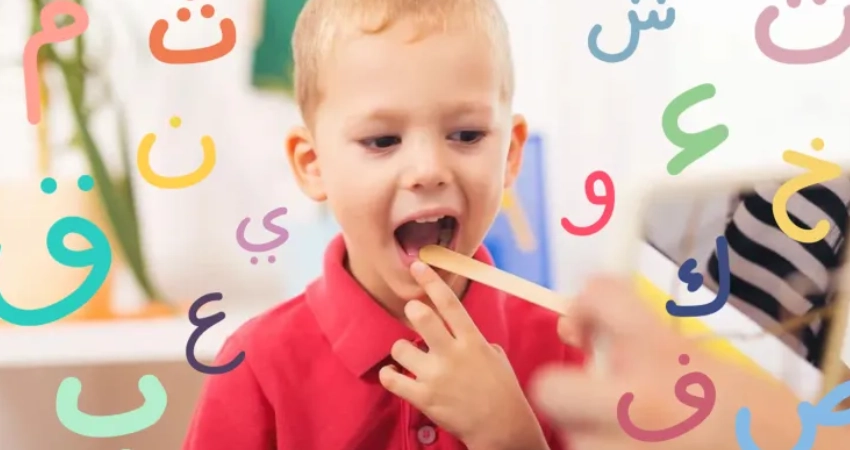
Language delay is usually linked to factors such as genetic predisposition, limited language exposure and stimulation, or a more general developmental delay. Speech sound disorders, on the other hand, are more often associated with issues in articulation mechanisms (like tongue and lip placement), hearing impairment, or ingrained incorrect speech habits.
Recognizing this distinction is crucial for tailoring the right intervention plan for each child—whether they need language enrichment sessions to build vocabulary and sentence skills, or speech sound (articulation/phonological) therapy to correct sound production and improve speech clarity.
This precise differentiation supports early, accurate diagnosis and effective therapeutic intervention, which together foster the optimal development of a child’s communication skills.
Types of Speech and Language Disorders in Children
Speech and language disorders in children fall into several main categories, each with distinct features and causes that affect how a child produces sounds and how fluently they are able to communicate.
One of the most common types is articulation disorders, in which the child has difficulty producing certain sounds correctly, such as /r/ or /s/. Another type is phonological disorders, where the child substitutes, omits, or simplifies sounds within words, making their speech hard to understand.
Children may also present with a fluency disorder (stuttering), which appears as repetition of sounds or syllables, sound prolongations, or sudden blocks and pauses during speech.
There are also voice disorders, such as hoarseness, rough or breathy voice, or reduced vocal loudness, often resulting from problems in the vocal folds (vocal cords) or improper voice use.
By contrast, language disorders involve difficulty understanding spoken language (receptive language) or forming sentences and expressing ideas using appropriate words (expressive language), even though the child’s sound production may be intact.
Recognizing these different types of speech and language disorders helps parents notice warning signs early and seek an assessment from a speech-language pathologist, in order to develop an effective, individualized treatment plan that supports the child’s speech, language, and overall communication development.
Articulation Disorders (Sound Production)
Articulation disorders are among the most common speech and language disorders in children. In this condition, the child has difficulty producing certain speech sounds correctly, or replaces them with other sounds that are easier to pronounce.
You might hear a child say “telb” instead of “kelb” (for “dog” in Arabic), or omit certain sounds from a word.
This can affect how intelligible the child’s speech is, undermine self-confidence, and interfere with communication at school and with peers.
A pediatric speech-language pathologist (SLP) conducts a detailed assessment of the child’s sound production, identifies the specific sounds the child struggles with, and then designs an individualized therapy plan. This may include articulation exercises, activities to strengthen the tongue and lip muscles, and systematically practicing words and sentences.
Early intervention for articulation disorders helps improve speech clarity, supports normal language development, and can reduce later difficulties in reading and writing.
Fluency Disorders (Stuttering)
Fluency disorders, especially stuttering, are a type of childhood speech and language disorder characterized by interruptions in the flow of speech—such as repetitions of sounds, syllables, or whole words, or abnormally prolonged sounds.
Parents may notice that the child is trying to speak but the words do not come out easily, or that the child avoids speaking in social situations out of fear of embarrassment.
Speech therapy for children who stutter focuses on teaching strategies to regulate speech rate, breathing exercises, and relaxation techniques, alongside emotional support and confidence-building.
The speech-language pathologist also guides parents and teachers on how to talk with the child in a supportive way—encouraging them without pressure or rushing.
Early intervention in fluency disorders can reduce the severity of stuttering and improve the child’s self-esteem and everyday communication.
Voice Disorders
Voice disorders in children are another category of speech and language disorders, and they present as changes in pitch, loudness, or overall voice quality.
A child’s voice may sound hoarse, unusually weak, or excessively high or low compared with peers.
Voice disorders may result from vocal misuse (such as shouting frequently), overuse of the vocal cords, structural problems such as vocal nodules, or functional and psychological factors.
Speech therapy for children with voice disorders includes a comprehensive assessment of vocal function, typically in collaboration with an otolaryngologist (ENT specialist). Based on this assessment, an individualized treatment program is developed. It may involve correct voice production techniques, training the child to use the voice in a healthy way without strain, and modifying daily habits such as frequent yelling.
Improving voice quality helps the child communicate more confidently and reduces the impact of the voice disorder on academic performance and social participation.

Expressive and Receptive Language Disorders
Expressive and receptive language disorders are key components in understanding the different types of speech and language difficulties in children. Affected children may have difficulty understanding spoken language (receptive language), expressing themselves with words and sentences (expressive language), or both.
The child may struggle to follow directions, form grammatically correct sentences, or may have a smaller vocabulary than peers.
Speech-language therapy aims to enhance comprehension skills using structured, child-friendly activities that rely on pictures, stories, and educational games, while also developing the child’s ability to express themselves using clear, organized sentences.
Treatment also involves training parents in language stimulation strategies at home, such as talking with the child regularly, asking open-ended questions, and repeatedly using new words across different everyday situations.
Early intervention for expressive and receptive language disorders supports academic achievement, improves social communication skills, and promotes overall linguistic and cognitive development.
Read More : Waad Center Services – Comprehensive Integrated Healthcare
Causes of Speech Delay in Children
The causes of speech delay in children are varied, ranging from simple, easily managed factors to more complex conditions that require specialized speech and language intervention.
Speech delay may be linked to hearing impairment resulting from recurrent otitis media (middle ear infections) or congenital ear abnormalities, which prevent the child from hearing and distinguishing sounds properly. Genetic factors can also play a significant role, as the likelihood of delayed speech increases when there is a family history of similar cases.
Neurodevelopmental disorders are among the important causes as well, such as autism spectrum disorder (ASD) and attention-deficit/hyperactivity disorder (ADHD), both of which can affect the development of communication skills and social interaction.
In some children, speech delay is associated with weakness in the orofacial muscles involved in speech, or with structural anomalies of the tongue or the palate (such as cleft palate), which make it difficult to articulate sounds correctly.
Environmental factors also cannot be overlooked, including limited verbal interaction and conversation with the child, or excessive reliance on screens instead of direct face‑to‑face communication—both of which are common contributors to delayed speech.
Early assessment by a speech and language therapist (SLP) is crucial to accurately determine the underlying cause, develop an appropriate treatment plan, and support the child’s speech development and overall language skills.
Understanding the causes of speech delay helps determine whether speech therapy for children is needed.
When Does a Child Need Speech Therapy for Children?
A child may need speech and language therapy if they show a clear delay in speech or language development compared with other children their age. This includes not using simple words by around 18–24 months, or having difficulty forming clear, understandable sentences after the age of three.
It is also advisable to consult a pediatric speech-language pathologist if the child consistently substitutes or omits sounds in a noticeable way, shows signs of stuttering, or speaks so fast or so slowly that it is hard to understand them.
Intervention becomes especially important when there are difficulties understanding simple instructions, or challenges with social communication skills, such as making eye contact or taking turns in conversation.
If the child has a medical history that includes prematurity, hearing loss, autism spectrum disorder (ASD), or global developmental delay, early screening for speech and language difficulties is crucial. Early identification allows for an appropriate speech and language therapy plan to be put in place, which supports the development of effective communication skills.
For this reason, any parental concern about a child’s speech or language development should prompt an assessment by a pediatric speech-language pathologist to accurately evaluate the situation and design an effective treatment program.
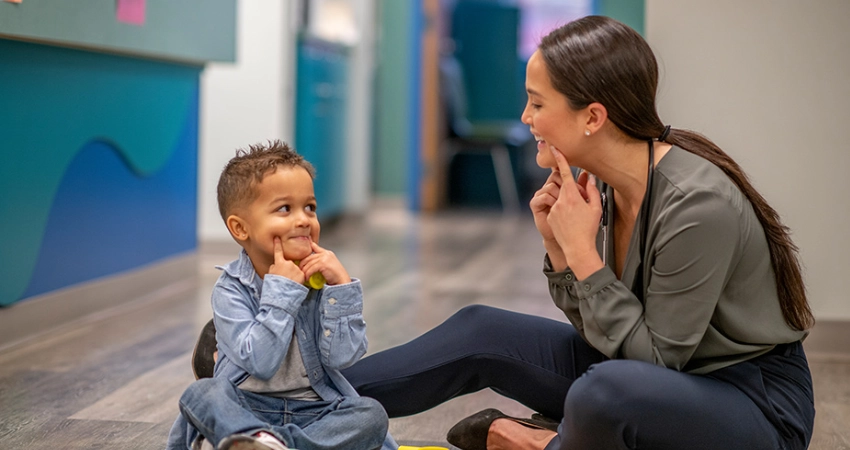
How is a child assessed at Waad Center?
At Waad Center, the speech and language therapy journey starts with a comprehensive assessment that looks at the child’s language, cognitive, and behavioral skills. The speech-language pathologist first gathers detailed information from the parents about the child’s developmental history and current speech and communication difficulties, then conducts an initial examination of the speech mechanism, including the tongue, jaw, lips, and breathing, to ensure they are structurally and functionally sound.
The child is then given standardized tests to evaluate receptive and expressive language, including how well they understand words and follow instructions, as well as their ability to form sentences and articulate sounds correctly. During this process, the therapist also observes social interaction, attention, and concentration throughout the session.
The specialist relies on internationally standardized assessment tools alongside direct clinical observation during play and structured activities. This combination helps reach an accurate diagnosis of conditions such as speech delay, language disorders, stuttering, or communication disorders associated with Autism Spectrum Disorder (ASD).
At the end of the assessment, the results are discussed with the family in clear, accessible language, and an individualized speech and language therapy plan is developed. This plan outlines the recommended number of sessions, stepwise goals, and home-based speech and language exercises to help the child achieve the best possible improvement in their communication skills.
Speech Therapy Process at Waad Center
At Waad Center, a child’s speech therapy journey begins with a comprehensive assessment. A licensed speech and language therapist conducts detailed evaluations of the child’s communication skills, sound production (articulation), and understanding and use of language in everyday situations, alongside a careful review of the child’s medical and developmental history.
Based on this assessment, an individualized speech therapy plan is designed, tailored to the child’s age and the severity of any language delay or speech disorder. The plan includes clear goals to improve articulation, expand vocabulary, and strengthen the child’s ability to express themselves and communicate with confidence.
Therapy sessions are delivered in a safe, stimulating environment that relies on play-based therapy, interactive activities, and visual and auditory tools. This approach makes speech therapy an engaging and enjoyable experience, encouraging the child to participate actively and make steady progress.
The Waad Center team is committed to involving parents in the treatment plan by providing home-based speech exercises and practical guidance. This helps families support the child’s speech and language skills in daily life, while ongoing follow‑up is used to track progress, measure improvements in speech and communication, and adjust the therapy plan when needed.
Through these integrated steps, Waad Center offers a speech therapy program for children that follows up‑to‑date evidence‑based standards, supporting the development of speech and language skills and reducing the impact of speech and language disorders on the child’s academic performance and social communication.
At Waad Center, speech therapy for children begins with a comprehensive assessment…
How long does it usually take for speech to improve?
The time needed for children’s speech to improve varies from one child to another, depending on several factors such as the child’s age, the severity of the speech sound disorder, the presence of associated conditions (like language delay or hearing loss), as well as how regularly the child attends speech therapy sessions at a specialized center and how consistently the family follows through with home practice.
In general, some children may begin to show noticeable improvement in speech clarity after a few weeks to a few months of consistent therapy, while others may require a treatment plan that extends over several months, or even a year or longer, in order to reach speech that is age-appropriate or close to age expectations.
The speech-language pathologist (SLP) conducts a comprehensive assessment of the child’s abilities to develop an individualized treatment plan and to set realistic time frames, which are reviewed and adjusted regularly based on the child’s rate of progress.
Regular attendance at therapy sessions, encouraging the child, and integrating speech exercises into everyday situations are among the most important factors that can accelerate speech improvement and support long-term success of speech therapy in children.
The duration of speech therapy for children depends on the severity of the disorder.
The Role of Parents in the Success of Speech Therapy
Parents play a pivotal role in the success of pediatric speech therapy; the expertise of a speech‑language pathologist alone is not enough without consistent follow‑through at home.
When parents commit to implementing the therapist’s recommendations—such as regularly practicing articulation exercises, encouraging the child to speak in everyday situations, and engaging in language‑based games—verbal communication typically improves more quickly and more consistently.
Creating a calm, supportive environment that is free from ridicule or comparisons with other children is also essential, as it strengthens the child’s self‑confidence and motivates them to keep trying and progressing.
It is equally important that parents collaborate closely with the speech‑language therapy team by attending sessions, asking questions, and carrying over the treatment plan at home. This ongoing involvement significantly enhances the effectiveness of speech therapy, helping children improve sound production, expand their vocabulary, and develop stronger social and language communication skills over the long term.
Why Choose Waad Speech Therapy Center?
Waad Speech Therapy Center is a specialized facility dedicated to the assessment and treatment of speech and language disorders in children, using the latest evidence‑based approaches.
The center is staffed by a team of speech and language therapists trained to work with speech delay, articulation disorders, dyslexia, and social communication difficulties. Each child receives an individualized treatment plan tailored to their age, developmental level, and specific needs.
Therapy at Waad is built on comprehensive intervention plans that begin with an in‑depth assessment of the child’s abilities, followed by a structured speech and language therapy program. This includes regular therapy sessions and practical exercises designed to improve articulation, expand vocabulary, and strengthen both expressive and receptive language skills.
Waad places great emphasis on involving the family in the therapeutic process by providing guidance and training for parents. This family-centered approach helps accelerate the child’s progress and supports continued development at home and at school.
The center also offers a safe, engaging environment equipped with modern educational tools that promote play‑based and interactive therapy. This transforms the treatment of speech and language disorders into a positive and enjoyable experience that helps children build confidence in themselves and in their ability to communicate.
By choosing Waad Speech Therapy Center for your child, you are ensuring access to specialized care focused on enhancing their communication and speaking skills—positively influencing their academic performance, social interaction, and overall quality of life in the future.
If you are concerned about your child’s speech development, early intervention makes a significant difference. The speech therapy team at Waad Center is ready to provide a comprehensive evaluation and a personalized treatment plan. Book your consultation today and support your child’s communication future.